
Understand Your Child's Communication and What Comes Next
A parent should not have to decide that a child “needs therapy” before asking for professional guidance. The evaluation is the place to sort that out.
What can a speech-language evaluation tell us?
An evaluation looks at the areas related to your concern and helps determine whether speech or language development is within expectations, should be monitored, or may benefit from treatment or another referral.
What Parents Often Bring Into the Appointment
Sometimes the concern is obvious: your child is not using many words, people cannot understand them, or they are getting stuck when they speak. Other times it is much less clear.
You may be thinking:
- “Maybe I'm comparing my child too much.”
- “He understands everything, so maybe I should wait.”
- “Her cousin barely talked at this age and caught up.”
- “The preschool teacher is worried, but I don't really see it at home.”
- “I don't want to start therapy if it isn't necessary.”
All of those can be part of the evaluation conversation. Our job is to understand the concern in context and explain what we find.
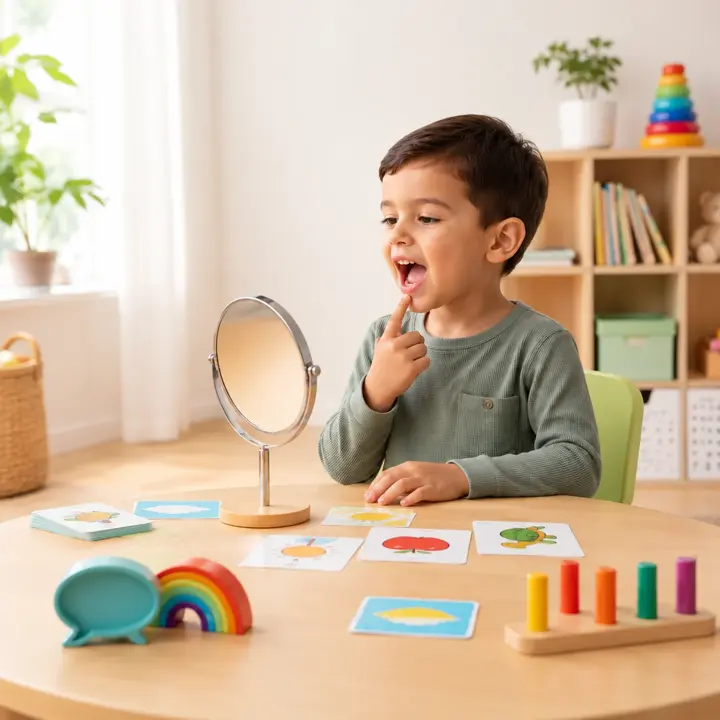
An evaluation can end in more than one way
Recommendations may include therapy, monitoring development, parent strategies, consultation with other professionals, or reassurance with specific things to watch.
What the Evaluation Process Looks Like
The exact assessment depends on the person's age and concern. A toddler with limited spoken words should not be evaluated exactly like a school-age child with articulation concerns or a teenager who stutters.
Parent / Client History
What you notice, when it started, what has changed, medical and developmental history, family history, school concerns, and communication across settings.
Communication Sampling
Observation of how the individual communicates naturally—through play, conversation, structured activities, or other age-appropriate tasks.
Targeted Assessment
Formal and informal measures selected around speech sounds, language, fluency, social communication, or other relevant areas.
Clear Recommendation
What we found, what it means, what is encouraging, what needs attention, and what we recommend next.
For Toddlers, the Evaluation Is Bigger Than a Word Count
A child who is late to talk is not evaluated by a single number alone. We may look at understanding, gestures, play, social interaction, sound development, vocabulary growth, word combinations, and how successfully the child communicates wants, needs, and ideas.
ASHA's clinical guidance on late language emergence specifically notes the importance of using multiple sources of information and considering comprehension, gestures, play, speech sounds, and family/caregiver input—not just a standardized test score.
Some late talkers do catch up. The challenge is that you cannot reliably identify a “late bloomer” simply because another family member followed a similar path. An evaluation can help identify factors that make monitoring reasonable versus factors that support earlier intervention.
What Should You Bring?
- Questions you want answered
- Teacher or daycare concerns, if applicable
- Prior testing or school reports, if available
- Examples or short videos of communication at home if the concern varies by situation
- A list of languages used at home and school
Do not worry about “preparing” your child to perform. We want the most representative picture possible.
This page is educational and is not a substitute for an individualized evaluation.

Playdate Speech Therapy is a one-clinician practice led by Uma Kalani Gosu, M.A., CCC-SLP, serving Charlotte-area families with individualized speech, language and fluency care.