Language stimulation
Self-Talk vs. Parallel Talk
Two simple ways to model words and short sentences during everyday activities.
Read the tip →
When you're worried about your child's speech, language, or fluency, you don't want to feel rushed into a program. You want someone who listens, gets to know your child, explains what she sees, and builds care around that individual child.
One-on-one care in Charlotte, North Carolina with Uma Kalani Gosu, M.A., CCC-SLP.
Specializing in toddlers through teens, with services available through adulthood.
Where We Play to Learn. For younger children, play is how we create natural opportunities to communicate—not a substitute for clinical goals.
It is normal to hear conflicting advice from relatives, friends, teachers, social media, and even your own memories of childhood.
A family member may say, “Your uncle didn't talk until he was four and he turned out fine.” Someone else may say, “Boys just talk later.” You may notice that your child understands everything and wonder if the words will simply come with time.
Those are reasonable questions. An evaluation is not an automatic commitment to therapy. It is a way to replace guessing with a clearer picture of your child's strengths, communication pattern, and next step.
You do not need to figure out the clinical term before calling. Tell us what you are noticing, and we can help sort out what it means.
Few words, limited word combinations, or spoken communication developing more slowly than expected.
Learn about late talking →Your child talks a lot, but family members or unfamiliar listeners may have trouble understanding.
Learn about speech clarity →Difficulty understanding directions, answering questions, finding words, building sentences, or expressing ideas.
Learn about language →Repeating sounds or words, stretching sounds, getting stuck, or becoming tense or worried about speaking.
Learn about fluency →Taking turns in conversation, maintaining a topic, and pragmatic communication in everyday situations.
Learn about social communication →Individualized support for functional communication and self-advocacy.
Learn more →Difficulty following spoken information, remembering verbal directions, or managing complex listening demands.
Learn more →A focused assessment to answer the question many parents bring us: “What does my child actually need?”
See the evaluation process →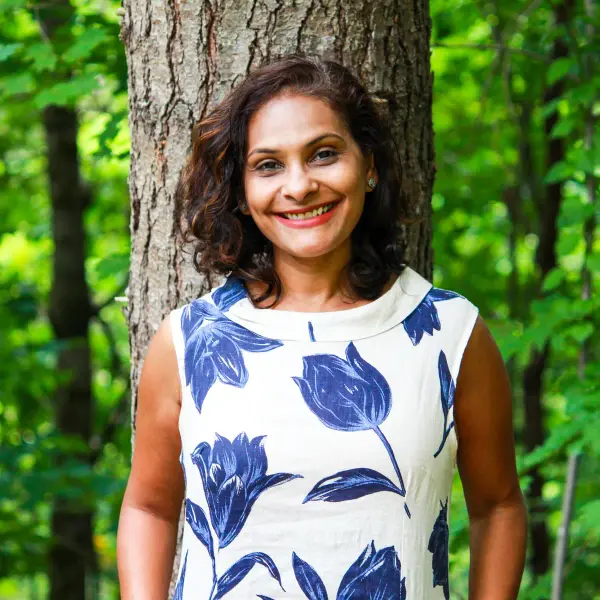
One clinician. One child at a time. A relationship built around communication.
Uma is the person who evaluates your child, builds the plan, provides therapy, follows progress, and talks with you about what is changing.
The continuity helps because she gets to know what works for your child and where the plan needs to change.
Sometimes the right recommendation is therapy. Sometimes it is monitoring. Sometimes another professional or a different evaluation is appropriate. And sometimes parents simply need reassurance plus specific things to watch.
The goal is to understand the communication pattern well enough to make an individualized recommendation.
What are you noticing at home, school, or with other people?
We look at the communication areas relevant to your concern.
We translate the findings into language that makes sense.
You leave with a next step—not just a test score.
Children often feel most comfortable and interactive when they are playing. Play helps them build a natural connection with the person they are engaging with, and that connection and interaction are key elements of effective therapy.
Hidden behind the play are specific clinical targets: requesting, commenting, following directions, expanding language, practicing speech sounds, taking conversational turns, or reducing the effort around communication.
Therapy should be engaging enough that a child wants to participate and structured enough that the clinician knows exactly what skill is being targeted and why.
Simple ideas from Uma to support communication during play, routines, and everyday time together.
Two simple ways to model words and short sentences during everyday activities.
Read the tip →Parallel talk, persistence, and pause—three practical ideas for creating communication opportunities.
Read the tip →Small changes during play and routines that can encourage a child to communicate.
Read the tip →Google reviews from families who have worked with Playdate Speech Therapy.
“We started going to Playdate Speech Therapy a month ago and I cannot be happier with the results I am seeing so far. I have identical twin boys who were diagnosed last June with a severe delay in their expressive speech.”
We started going to Play date Speech Therapy a month ago and I cannot be happier with the results I am seeing so far. I have identical twin boys who were diagnosed last June with a severe delay in their expressive speech. We followed through with the evaluation by seeing a therapist once a week for three months through the state. We ended up cancelling the services after the therapist left for a position elsewhere and to be honest we were not seeing much improvement in the boys’ speech.
Uma Kalani, our therapist at Playdate Speech Therapy, has been a Godsend. My twins are wanting to talk more and make the effort to form new sounds, which is quite an improvement from where they started a month ago. They love going to her space, playing and learning from her and even have a hard time leaving they love it so much. I find myself learning how to be a better and more confident teacher/guide for my kids at home to help improve their speech.
I can’t recommend Uma and this business enough for all of the wonderful improvements we are seeing in such a short amount of time!
“I highly recommend Ms. Uma for speech therapy. She is so patient and kind with my son. We see amazing results from the therapy.”
Google Review — Jaylene T.“Absolutely wonderful speech therapy sessions with patience and smooth guidance. Uma knows her craft and applied it well every time.”
Google Review — Eric W.We are in-network with UnitedHealthcare, Blue Cross Blue Shield, Alliance Health, WellCare, Carolina Complete Health, and Healthy Blue Medicaid.
We provide a superbill with applicable diagnostic and treatment codes for families who wish to seek possible out-of-network reimbursement. Coverage and reimbursement vary by plan.

3900 Colony Rd, Suite B, Charlotte, NC 28211
Call or Text Us: 704-912-4622
info@playdatespeechtherapy.com
Serving families from Charlotte, SouthPark, Myers Park, Cotswold, Ballantyne, Matthews, Pineville, Waxhaw, Indian Land, and surrounding communities.
We built our Parent Resources around the questions families ask before they ever call a speech-language pathologist.
Start with the question. Tell us what you are noticing. We can help you determine whether an evaluation makes sense.