
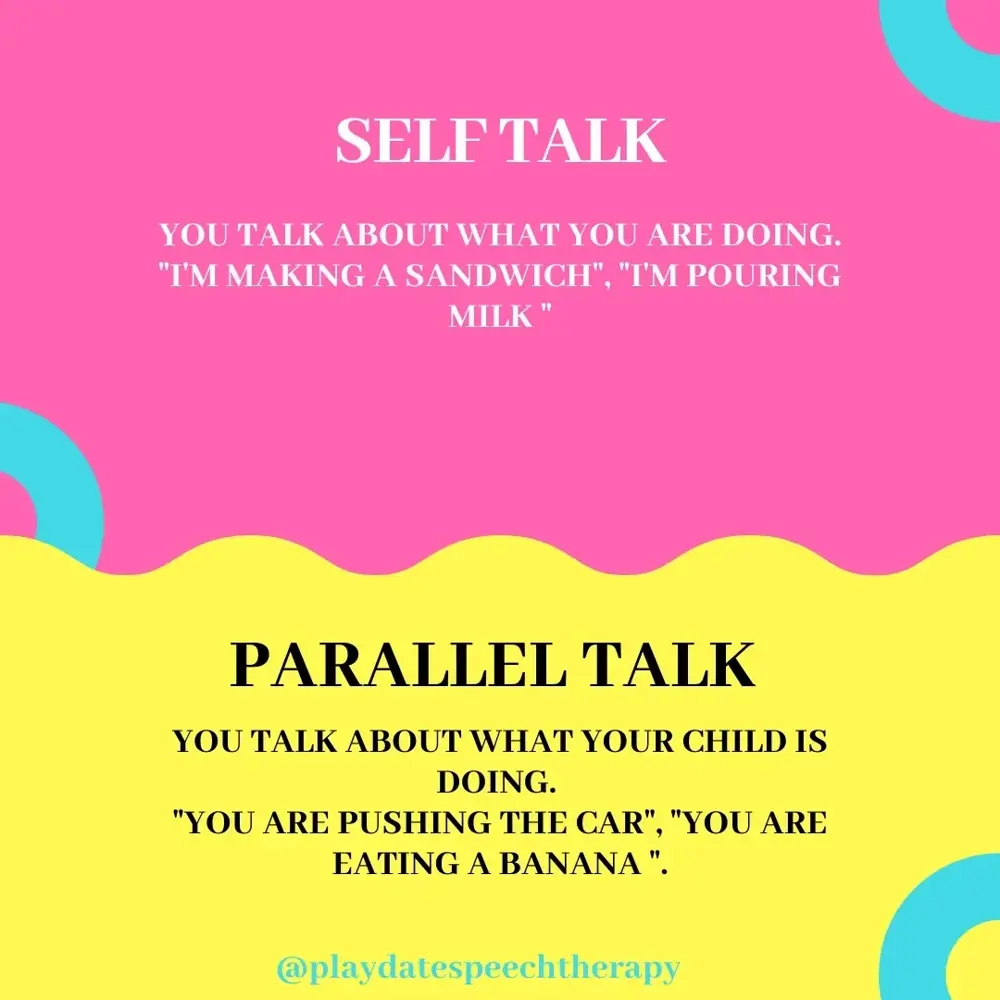
Self-talk and parallel talk create an association between actions and words, helping to build language skills. They model language for your child and help build their vocabulary and sentence structure. Self-talk and parallel talk are simple but effective language-stimulation strategies.
Self-talk is talking about what you are doing: “I’m making a sandwich.” “I’m pouring milk.”
Parallel talk is talking about what your child is doing: “You are pushing the car.” “You are eating a banana.”
If your child has not yet used their first words, self-talk and parallel talk are great ways to model and provide language stimulation. Use simple and short phrases and sentences to associate the act with the words. The best part is you can do this at any time and anywhere. The main thing to remember is to make sure you have their attention when you use self-talk and parallel talk.
Keep talking!

Speech-Language Pathologist • Playdate Speech Therapy